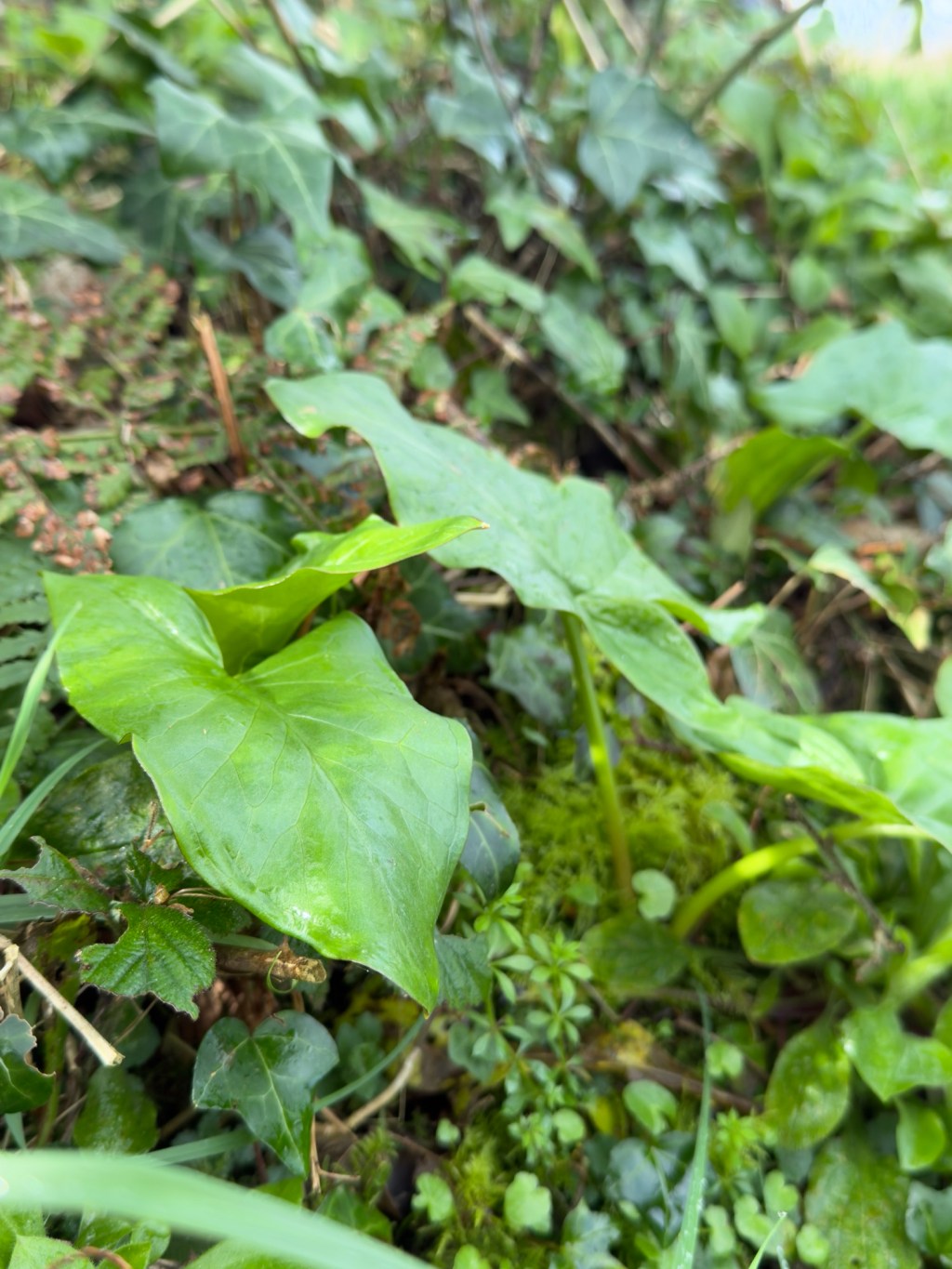
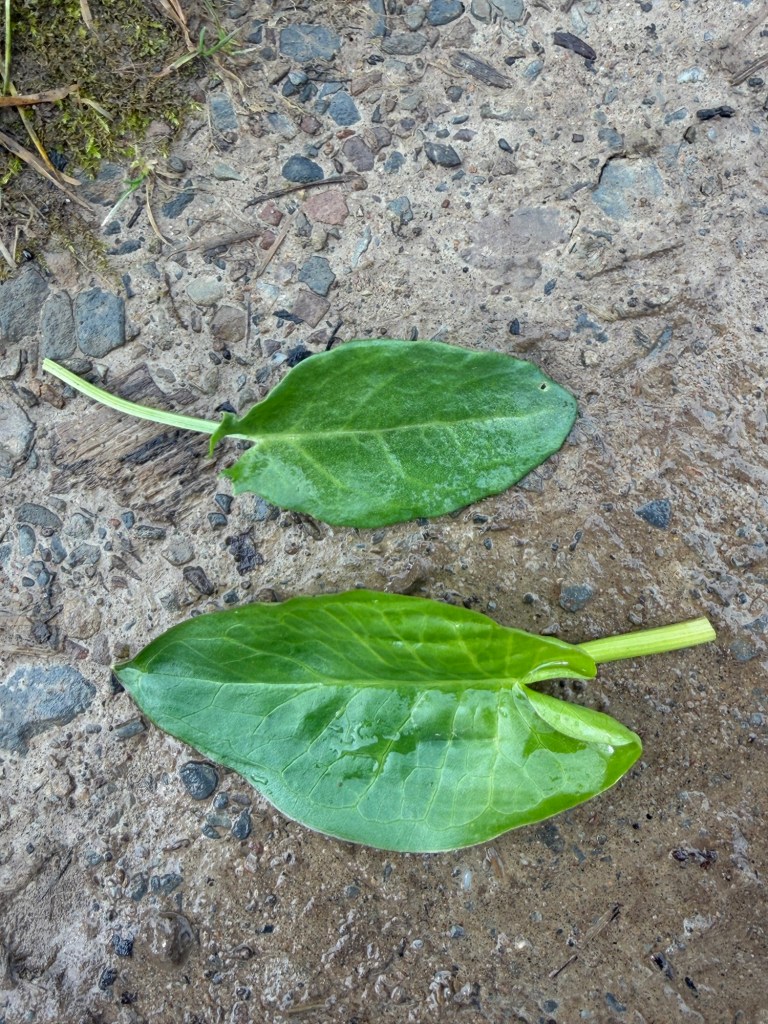
These two common wayside herbs can be mistaken for each other. The colours and size are similar, they grow in the same spaces often right next to each other and they both have an unusual cutaway section next to the leafstalk.
It’s vital that these are correctly identified before foraging.
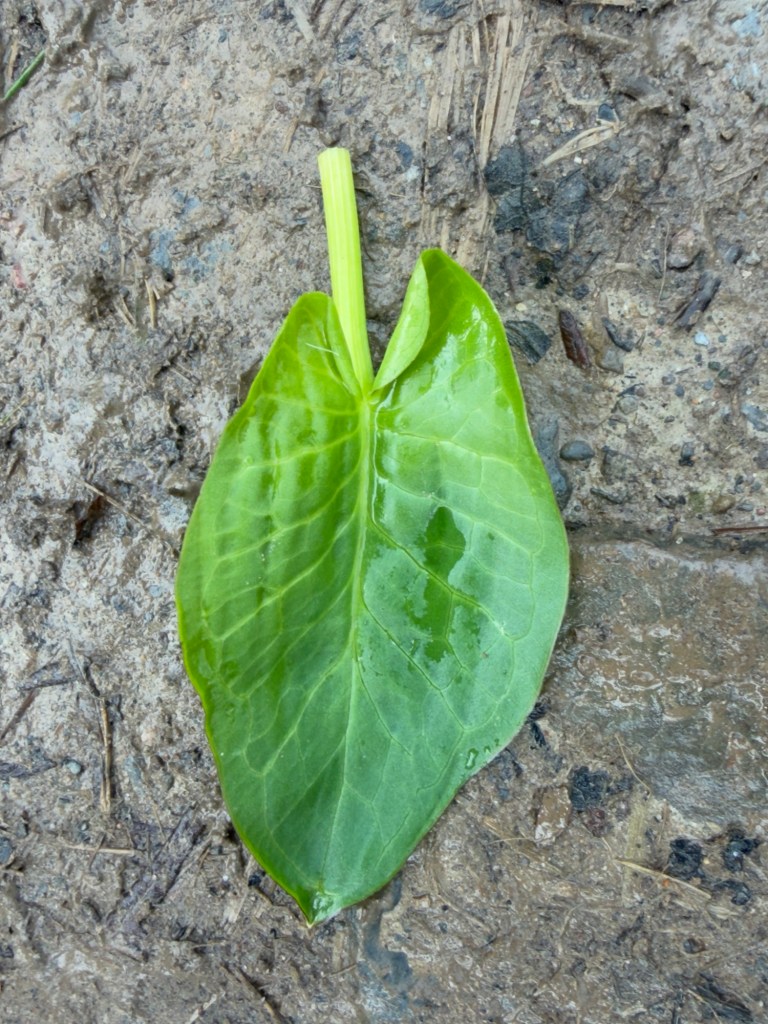
This one is the young leaf of the plant we most commonly know as Lords and Ladies or cuckoo pint; that is Arum maculatum. In Cymraeg it is also associated with the cuckoo and is known as Pig y Gog (cuckoo’s beak). Later in the year it presents a beautiful white lilly shaped flower which matures to show a cluster of gorgeous red berries. It contains oxolates of saponins which have needle-shoes crystals. If you were to put a piece in your mouth, it would taste like millions of razorblades. The roots contain a lot of starch and historically this starch has been collected by digging the roots and boiling them up. It is possible, I believe to use the starch as one would use constarch in cooking but I’m not sure I would be recommending that. It has been used to starch fabric in the textiles industry and collected commercially. People that were involved in the collection and the boiling of the starch suffered blistering of their skin.
This other one is the common sorrel: Rumex acetosa (Suren). This is a beautiful little plant. It seems to be in season in West Wales pretty much throughout the whole year. It’s good for eating and can be added to your salad and has got a really lovely lemon flavour.
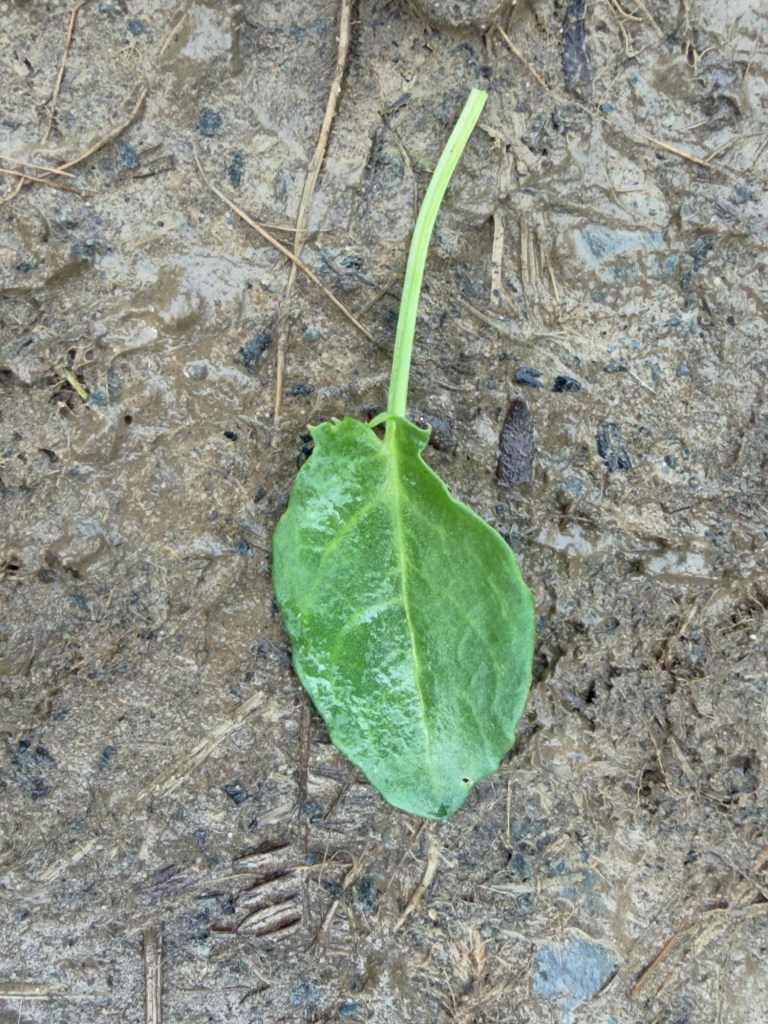
It gets much easier to differentiate the two leaves as they got older. The shapes change, the arum arm becomes more jagged and is larger. The wood sorrel remain small. The flowers and flower stocks are totally different. At this young stage you can tell the difference because with the sorrel the veins of the leaf radiate outward of the centre all the way to the margin of the leaf whereas with the arum there is a unusual vein that goes all the way around the outside of the leaf a few millimetres away from the margin, and the radiating veins of the leaf itself terminate at that vein rather than going all the way to the edge.
A good forager will be watching these leaves closely as they go through their stages of development so that they can be recognised on sight.
DNB March 2026
 the Crows Nest
Leave a comment